US Vote Blog

Recent Content

Image
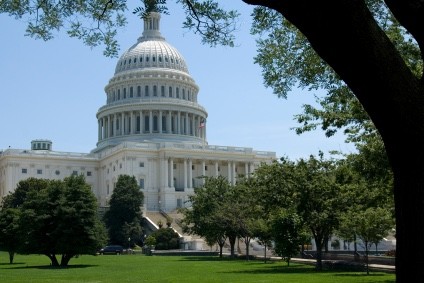
picture of us capitol building on a sunny day
Civics Crash Course Lesson 6
This Civics Crash Course lesson unpacks the structure, responsibilities, and unique authorities of the House and Senate.

From taxing to declaring war to regulating commerce, Congress was delegated substantial authority in our constitutional framework. Learn how the founders designed this institution and how its powers have evolved over time.
Image
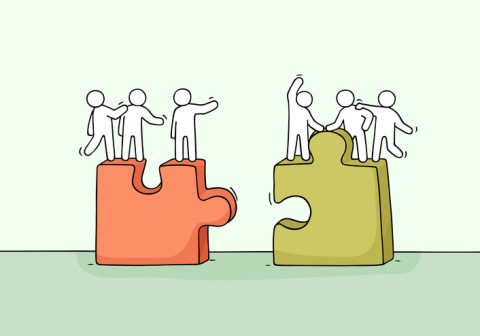
two puzzle pieces that fit with three people on each one separated
Civics Crash Course Lesson 5
The Separation of Power
Whereas the first half of our Civics Crash Course lessons address how we both empower and restrain government in our federal system, next we will focus on how institutions of government function. In the second half of our Civics Crash Course lessons, we pivot from checks and balances to the separation of power.

Beginning with the executive branch, join us to identify the powers delegated to the three federal branches in the U.S. Constitution.
Image
guest blog by NCSL
How do elections work in the United States?

Until recently, the answer was mostly, “according to state law—and state laws vary.”

While true, that wasn’t much help to journalists, policymakers or the voting public—and that answer focused on differences, not commonalities.

Now, Helping America Vote: Election Administration in the U.S., a new publication from the U.S. Election Assistance Commission (EAC) and the National Conference of State Legislatures (NCSL), gives a more complete answer, acknowledging differences while following the through-line all states follow.
Image
Woman working at desk - creating a Voter Account
Four lessons into our Civics Crash Course, let’s pause to measure your mastery of your civics sessions to date. Or - if you’re jumping in for summer school - take this quiz and see which topics you need to catch up on.

Start by answering 4 multiple choice questions. Then, self-assess using our Civics Mastery Scale. Take a look at the corresponding crash course lessons to read up on any answers you missed or to deepen your understanding

Share this quiz with others to challenge them to brush up on their knowledge of the U.S. government.
Image
US Vote Logo
We are writing on behalf of U.S. Vote Foundation and our Overseas Vote initiative to urge your continued attention to the voting rights of U.S. citizens living abroad and members of the Uniformed Services and their families.

The Uniformed and Overseas Citizens Absentee Voting Act (UOCAVA) is a cornerstone of inclusive democratic participation — however, its promise is constrained by low participation and persistent misunderstandings.

U.S. Vote Foundation calls on the Committee to take up the next generation of UOCAVA reforms — reforms that build on the program’s success to increase voter participation.
Image
multicolor map of united states
Civics Crash Course Lesson 4
The Constitution was designed to protect individual rights from the tyranny of the majority. To this end, state governments may be instrumental in safeguarding your freedoms through our federal system. Federalism is a form of government that is divided between a central authority and smaller units of power.

Our Civics Crash Course Lesson 4 will help you unpack the powers held by states and how they interface with the federal government to better understand the balance of power in our republic.
Image
people exchanging ideas
Civics Crash Course Lesson 3
Democracy, fundamentally, is the rule of the people. But what does ‘the people ruling’ look like in practice? Citizens voting for other citizens to serve as representatives in government - that’s the main way popular sovereignty manifests in the United States. Voting is, in fact, the most common method of democratic participation in our republic.

Our beloved nation would languish without citizens stepping up to run for office or stepping out to cast ballots. While taking part in elections is essential for our democracy to survive, the founders were keenly aware that our republic would require an involved, educated citizenry for our nation to thrive.
Image
rotten red apple
Civics Crash Course - Lesson 2
As our nation debated ratification of the Constitution in the late eighteenth century, the Anti-Federalists raised concerns about the danger of federal representatives losing touch with their constituents in a nation as sizable as the United States.

Between elections, institutional mechanisms are in place to hold elected officials responsible if they fail to be representative or act in bad faith.

By design, there are several formal and informal means available for our institutions to hold elected officials accountable for their actions and inactions.
Image
3 people on left with arrow pointing to more people on right
Civics Crash Course - Lesson 1
Democracy is a system of government in which the people are sovereign. In other words, the fundamental essence of a democracy is rule by the people. A democratic government operates with the consent of the governed based on the popular will.

There are two main types of democracy at work in the United States: Direct Democracy and Representative Democracy. Both models are based on the will of the people expressed through their cast ballots.

The difference between a direct democracy and a representative democracy comes down to who creates the laws by which we are governed.